• Law & Order… ?

    “So what could go wrong?”
    Plenty. Especially when we’re talking mining — a world of dynamite, heavy machinery, and even heavier politics.

    From the earliest days, mining and quarrying have carried a reputation for danger. Historically, they were even used as death sentences—assignments designed to remove political threats. King David himself probably wouldn’t have blinked at the thought.
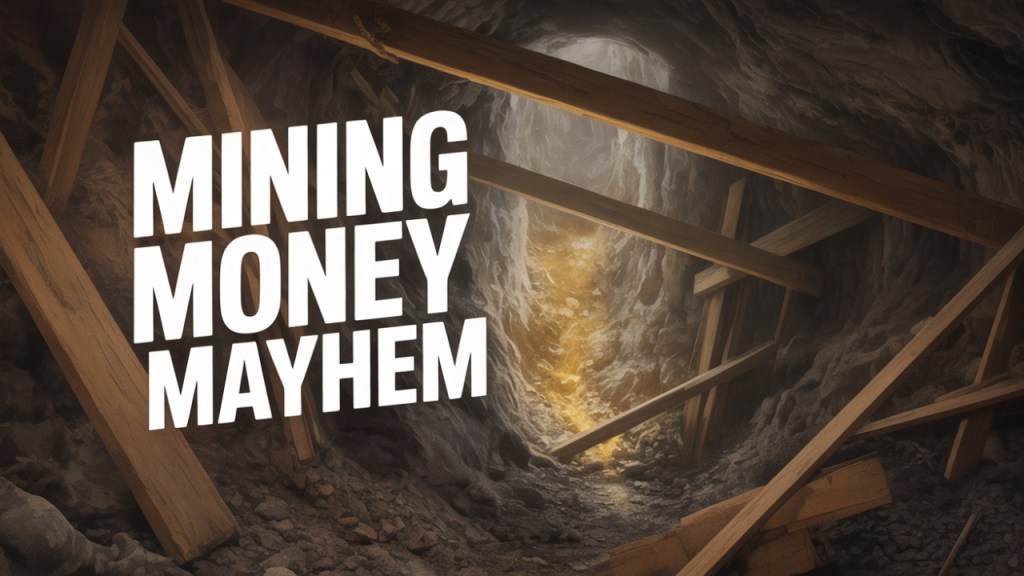
    So how do we manage chaos? That’s where law and order come in. Enter: Doc Holliday, Virgil Earp, Wyatt Earp, and Morgan Earp. They weren’t just lawmen—they were the storm. Skirt the law? Evade regulation? Cross them, and you did so at your peril.

    But in modern mining, the threats aren’t just six-shooters and saloon standoffs. No—today’s dangers come in the form of jurisdictions, creative accounting, and PR-driven fantasy.


    Jurisdictional Jams: When the State Says, “Pay Up”

    Take Mali.
    Barrick Gold is now locked in a legal cage match there, tangled in half a billion-dollar tax dispute. What’s worse? The government has sequestered one of Barrick’s largest mines in the country.

    Lesson: Jurisdictional risk isn’t a footnote—it’s the whole story.


    Deposit Dinging: The Devil in the Drill Hole

    Ever seen this gem?

    “Errata: Drill Hole DS-169169 was listed as 100m of 2.34 g/t. Correction: 1.00m of 0.234 g/t. Please note accordingly.”

    Translation: The resource isn’t ten times richer than expected—it’s ten times poorer. Investors only find out after the stock price has already nosedived. By then, it’s too late to react—unless you enjoy doing a Kramer-style write-off.


    The Classic “Asset Swap Swindle”

    Here’s a good one:

    AXRF Corp. trades its valuable Red Dog ADD-IN (231 claims in Alaska) for two silver mines in Guatemala. Sounds like a blockbuster trade—until you realize:

    • Both Guatemalan mines are shut down due to indigenous water rights issues.
    • The Alaskan borough is about to demand a remediation bond equal to 50% of the mine’s capitalization.

    Both companies scramble to save face, but the stock is already circling the drain.


    Corporate Shuffle: Now You See It, Now You Don’t

    Watch for the executive musical chairs. For example:

    • CFO resigns.
    • COO steps in as temporary CFO.
    • Another firm announces a new COO… who used to be with the first company.

    It’s corporate three-card monte. Distract. Delay. Deny.


    Optimism, Stupidity, and Debt: A Recipe for Disaster

    Take Aurcana Corp.
    Once full of flashy news releases and promises, it ended in bankruptcy. All assets sold off. Debts defaulted. The only thing left? Shareholders wondering what went wrong.

    Red Flag: When a stock refuses to go up on good news… someone knows something you don’t.


    Final Word: Be Skeptical. Prove Everything.

    Here are three hard-won lessons from the trenches:

    1. The Army: Don’t blindly follow authority. Gullibility is expensive.
    2. Aurcana: Hope is not a strategy. Wishing doesn’t change fundamentals.
    3. “Harry”: Whether it’s fraud or just PR spin, deception is deception.

    Bottom Line

    In mining, law and order aren’t optional—they’re survival.
    From dusty claims to boardroom games, the risks are real, and the cost of naivete is high. So take a breath. Ask hard questions. Read the footnotes.

    Because when things go wrong in this sector, they don’t go a little wrong—they go spectacularly, explosively, bankruptingly wrong.

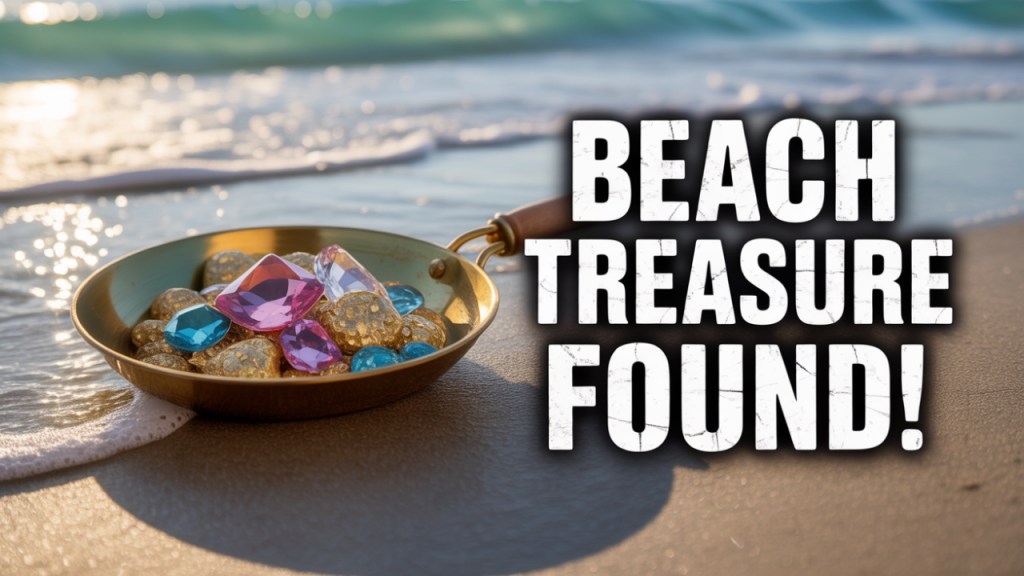
    See you Next week? Panning for treasures at the beach.
  • Silver, Gold, and the Old Firelight Debates

    By GH | Money and Mining Letter

    (see below for video)

    Humans gathered around firelight long before stock markets, bank notes, or crypto coins. They shared stories and sipped early brews. They etched bone with tally marks. Gambling began. So did commerce, barter, and fierce debates over value.

    Somewhere along a Turkish creek bed, humans discovered Electrum—a natural alloy of Gold and Silver. Soon, Lydia coined it, and a new debate arose: Which is better—Gold or Silver? It was the beginning of the longest-running rivalry in human finance.

    Gold vs. Silver: The Ancient Argument

    Pull out a Periodic Table and you’ll see Gold (Au) with an atomic weight of 197, Silver (Ag) at 108. One’s heavier, rarer, and shinier. But numbers only tell part of the story.

    Once, the ratio between them hovered closer to 1:1. Today, the ratio floats around 100:1, meaning you can get 100 ounces of Silver for one of Gold. That’s a massive shift from history—and one that stirs up a lot of modern discontent, especially among Silverbugs.

    Now, for all us working folks without a spare $3,000 for an ounce of Gold, the question remains:

    Why bother with Silver?

    Consumption vs. Preservation: Why Silver Will Win the Long Game

    Here’s the rub:

    • Gold: Nearly every ounce ever mined still exists. It’s hoarded, treasured, recycled endlessly.
    • Silver: Much of it is consumed—non-recoverable—especially in solar panels, electronics, and increasingly, military applications.

    Even official U.S. estimates claim cruise missiles like the Tomahawk use ~20 ounces of Silver per unit. Unofficial sources say it is 500 ounces or more. Torpedoes? Maybe 1,000. These claims are denied now, but only recently—and only after Silver started climbing in price.

    If Silver is being quietly drained from the global stockpile, it adds fuel to the argument: Silver is under-priced.

    Gold: The Fortress Metal

    Gold isn’t consumed like Silver. It’s banked, vaulted, and now, hoarded by central banks bracing for the demise of fiat money.

    Gold is real. Tangible. Immune to hacking. Outside the digital system.

    Gold doesn’t get destroyed. It’s the fallback when confidence in governments or currencies falters.

    Still… it’s expensive, and that creates a barrier for average folks.

    Silver: The Sleeper Asset?

    The Silver supply story is simple and sobering:

    • Production declining (fewer new discoveries, lower ore quality)
    • Consumption increasing (solar, weapons, tech)
    • Recycling inefficient or impossible

    This is a classic supply squeeze.

    Combine that with a historic value ratio skewed against Silver, and what do you get? A setup with leverage potential. If the Gold-to-Silver ratio returns to the historical mean, Silver will outperform Gold. Consider a ratio of 16:1 or even 40:1. Silver outperform Gold by multiples.

    History Rhymes: Mean Reversion Is Real

    Interest rates were artificially held at 0%. Now they’re reverting.

    Silver was artificially suppressed. Is that ending too?

    With current geopolitical tensions, a clean energy push, and monetary unrest… Silver’s moment is approaching.

    Final Thoughts: What’s the Best Move Now?

    If you’re concerned about:

    • Inflation
    • Loss of purchasing power
    • Being priced out of traditional investments

    …then both metals have a role to play. But Silver offers the better upside in the near term, especially for everyday investors.


    Subscribe to the Money and Mining Letter for monthly insights, analysis, and plainspoken strategies for real investors./

    —GH

  • A magician promises to deceive you and he does sleight of hand, misdirection at a key moment

    A Biblical cycle timing expert, and geopolitical expert states. With “The Noah cycle of 40 days and 40 nights “ comes the great UNDONE. so folks make sure your Ouija boards are oiled up and ready to go ! Look over here at this bright, shiny object, never mind those dull uninteresting facts. Very Entertaining, Thanks Mr. Pony!

    So when you meet narcissistic frauds like this, Run, Don’t Walk as far as you can away. I blacklist them.

    Enough wasting time. For the fun stuff JUNIOR GOLD MINERS.

    Here they are, the heroic salmon of the miners. They always swim upstream against huge odds, like bears, eagles, and con men, to name a few hazards. TREWLAWNY Mining, worth remembering. IAM Gold acquired them. There was quite a stir. The publication revealed they had drilled over 500 meters. It was close to 1 gram per tonne. This was for about 7 million oz of gold over the life of the mine at Cote’ Lake. As salmon go, this was a monster. The point here is clear. When the goods are available, the fancy footwork stops. Even the smoke and mirrors are blown away.

    Next stop, GREAT BEAR Mining, hit 500 meters of 2.5 grams @ tonne of Gold in the DIXIE Zone. You can see something was happening. They announced drill results between 2018 and 2020. Kinross began investing in them. We saw them and recommended when they jumped to $3.00 from a standing start. The total buyout compensation was something over C$ 30.00 with all classes of securities included. Again, a Junior Gold goes Big Time.

    Kinross is one of the big 5, at least in Canada. They expect maybe 6 to 8 million ounces of gold to be produced from the original sites. This is notwithstanding new deposits.

    You have deposits, proximity, and money available. These are the most important units required for a Gold Junior Miner to make it big time. Those are some of the hazards of being a salmon swimming upstream in the Junior Gold Miner space. No magicians can change any of that.

    Gold as per an outlook, is showing up in a lot of conversations about debt, reserve currency, and trade.

    Its unrealistic ignoring that Gold will not correct this run, in some measure. The pressures are incessant, but the forces of suppression will not go away. I suspect they will be far less successful than in the past. Nonetheless, this does not remove the need to be aware of potential corrections.

    Why not more M & A activity in Gold Juniors. Or maybe not yet. The Juniors with big probability deposits be playing coy. The memories of overpaying for merged plays lingers,  so that is a factor here.

    The meme “Always a Bridesmaid, Never a Bride” has played so many times for Silver. No one in North America believes in the current manifested trend in Silver.  Very few except for SilverBugz.

    Now all the SilverBugz, talking among themselves, are celebrating pre-maturely? Maybe. Reading I see all manner of projected price targets, some far out. From my internal data, I can develop a series of potential targets for silver within the coming 12 months. These targets are: US$ 45, next US$ 50, and lastly in this series, US$ 70. Some others are projecting higher which to avoid gossip, I will not mention here. The Gold::Silver ratio is 100::1, which is a historical anomaly. Guesses are being made about the ratio’s potential to revert to a more historical mean (lower).

    My Silver Canaries tell me nothing about that, and are calm in their environments, not upset.

    Till next time,

    Denaliguide (Nick)

  • No Whining

    © Nick Migliacco, 6.3.25


    Who you know is important — but who knows what is even more important.
    And the folks I follow? They definitely know what’s what.

    Now, why would anyone bother with the risk and angst of gold miners?
    I’ll tell you why — two key reasons that have proven themselves to me:


    *not a full transcript follows:

    1️⃣ Small Bets, Big Potential

    As I shared in my last issue of the DGS Newsletter, shares of gold miners can start at just C$0.20. They can go up to $20. With as little as $100 plus commission, you can take a position in gold’s potential upside.

    It’s just a “little piece of the action,” true — but those little pieces have leverage. And that brings us to reason #2…


    2️⃣ Leverage & Excitement

    When a gold miner hits on a new deposit, excitement and leverage can build fast. The potential for buyouts or rapid stock appreciation increases. That’s where informed selectivity, which I offer in DGS Letter, makes all the difference.


    Gold & Silver Metal: A Different Game

    If you prefer physical metal — gold or silver coins and bars — the game changes:

    • Physical metal is insurance, not leverage.
    • If you store it securely, no one can swindle it from you.
    • I buy physical metal when I have cash needing a safe place to hold purchasing power — not for speculation.

    Today’s 100:1 price ratio between gold and silver changes accumulation strategies. You actually can accumulate more silver metal than gold. In mining stocks, nevertheless, the opportunities vary — so again, stay informed through the DGS Letter.


    The Importance of Having “Canaries”

    Now here’s where we shift gears — this is not a test, but an essential strategy:

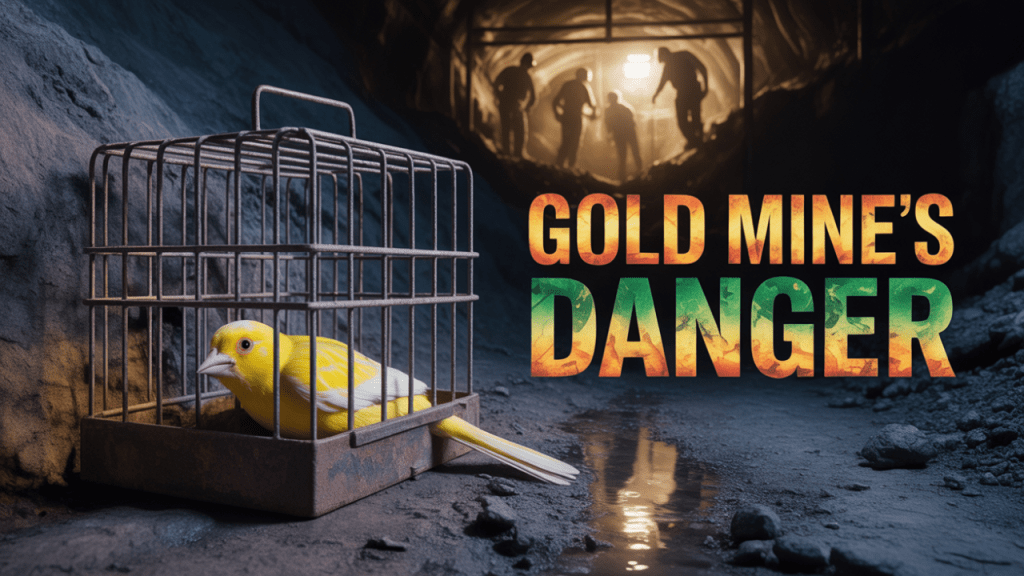
    You’ve heard the phrase “canary in the coal mine” — an early warning system for danger.
    In the world of gold and silver mining stocks, having your own “canaries” is crucial. These canaries come in the form of favorite charts and indicators. They can alert you to market changes early. It is akin to how a loyal dog senses shifts in its environment.


    Recent Market Action: The Huskies Were Howling

    Last week, the stocks I track were acting up like a kennel of huskies eager for a sled run:

    • I screened 190 mining stocks in just a two-week span. This is an unusually high number. Only about 10% made the cut.
    • The choice was surprisingly broad:
      • Explorers: 2
      • Developers: 5 Gold, 3 Copper, 1 Zinc, 1 Silver
      • Producers: 2 Gold, 2 Copper

    This diverse mix caught my attention. Four of my trusted commentators were unusually negative about current global events.

    But when I checked my “canary” indicators?
    No alarms — in fact, those canaries were fat and happy. That also got my attention.


    Flashback: Lessons from the Whale

    Let me take you back to a major market event: The Whale.

    In 2015, the U.S. Treasury lost its AAA+ rating. Someone (still unknown) dumped a massive amount of Newmont Mining’s production onto the futures market. It was equivalent to three years’ worth of Newmont Mining’s annual production in just one day.

    The result? Gold crashed from $700+ to the mid-$300s — and it took about three years to recover and climb to $1,900.

    The biggest Gold Miner ETF (GDX) was driven down to $12.64 and stayed in that range for two years. It broke free at $26. It then began its run to $46. It tracked gold’s rise from $358 to $1,900 by 2023.

    Those who stood their ground? They prospered.
    Those who ran for the exits? They missed the recovery.


    Final Wisdom: Stand Your Ground

    As for what happens next? No one knows for sure.
    But here’s what I know from hard-won experience:

    If you run, you’re done.

    Stay informed. Stay steady. And keep your canaries close.
    That’s the way to ride in this game — with no whining.

    Till next time,

    Nick, Denaliguide

  • When the whales try to drown you, don’t run — take your shot.

    It sounds simple when you’re starting out in investing. But soon enough, you realize: you’re the ham sandwich everyone wants a bite of. And the ones running the casino? They designed the game to help themselves, not you.

    There’s a saying on Wall Street: “You never see the customers’ yachts.” Remember that.


    The Stop-Loss Trap

    “Stop-loss” orders are marketed as a safety net. You set your price. If the stock drops, you’re automatically out with a controlled loss.

    But here’s the trap: intraday volatility. Stocks can bounce around 10–20% during a single day. You be forced out mid-day, just before it rebounds. Your shares? Now held by someone else at a discount.

    This manipulation of intraday ranges happens all the time.

    A smarter approach? Set your exit strategy based on the daily close, not panicked midday dips. Let your decisions be driven by strategy, not noise.


    Flash Crash: A Lesson in Gold and Silver

    Here’s a real-world example:
    At one point, traders dumped enormous quantities of gold and silver on the markets. This happened in just one hour. This was 10% of the world’s annual supply. Prices tanked: gold dropped $200, silver lost $2.00.

    But within 48 hours, both had recovered.

    Manipulated? Almost certainly. Illegal? Possibly? Enforced? Don’t count on it.

    No one’s coming to protect your portfolio. That’s your job.


    The Mirage and Mayhem of Junior Golds

    Let’s talk Junior Gold miners — the exciting but dangerous frontier of investing. These companies don’t yet mine; they explore. They’re the hopefuls chasing the next big strike.

    Why do they fail?

    • ✘ Bad metallurgy: Pretty rock, but toxic mix or costly to extract.
    • ✘ Deep or low-grade deposits: Expensive to mine.
    • ✘ Financing traps: Dilution through share issuance or fragile joint ventures.

    People chase the mythical 100:1 payoff. In truth? Odds are closer to 1000:1.

    Worse still, juniors don’t move in sync with the price of gold. They have their own unpredictable cycles. It’s not a straight line. It’s a wild ride with no seat-belt.


    When Big Players Make Big Moves

    Consider recent moves in the mining sector:

    • Newmont is selling off several “non-core” producing mines to focus on long-life, high-grade assets in politically stable regions.
    • Barrick Gold spun off K92 Mining (KNT.TO) under $2. Today? It’s over $14.

    What happened? Someone took the time to study the risks — and saw a straight path to success. Lesson: Watch the spin-offs. Sometimes they’re gold mines in disguise.


    Gold, Banks, and the Debt Bomb

    Two major macroeconomic controversies are unfolding:

    1. Basel III and Physical Gold

    Basel III regulations will soon demand banks to back gold positions with physical metal. No more paper gold. No more empty promises. That will tighten global supply and reshape the gold market overnight.

    2. The U.S. Debt Dilemma

    With a national debt over $37 trillion (and off-book liabilities pushing $200 trillion), the U.S. faces impossible choices:

    • Issue 30–50 year gold-backed bonds (as Dr. Judy Shelton proposed)?
    • Sell off public land?
    • Keep the illusion going by having the U.S. and UK buy each other’s debt like two drunks holding each other up?

    And what about the gold the U.S. holds for other countries and hasn’t returned?

    This is more than policy—it’s a financial minefield.


    So What Can You Do?

    Here’s the hard truth:

    You are your own best security.

    No agency, analyst, or algorithm can protect you like you can. You must:

    • Trust your strategy.
    • Understand the cycles.
    • Learn the games.
    • Know when to stand your ground.
    • Know when to get to shelter.

    You not fight the wave. Still, you can at least remove yourself from the target zone. Then you can wait out the storm.


    Bottom Line:

    This is not a market for the faint of heart. It’s for the savvy, the studied, and the steadfast. If you run, you’re done.

    But if you stand your ground, you have a shot.

    👉 Ready to sharpen your investing instincts?
    Markets are rigged, volatile, and full of traps — but knowledge is power.
    Don’t run. Stand your ground.

    If you found this post helpful:
    Share it with a fellow investor
    Leave a comment below — what’s YOUR gold market strategy?
    Subscribe to my YouTube channel for more insights on precious metals, juniors, and market survival.

    Also, Subscribe to my newsletter for 1/2 price. Thanks for supporting Denaliguide

    Stay smart. Stay steady. You’ve got a shot.

  • Self-confidence isn’t something you stumble into. It’s built—deliberately, persistently, and often in quiet struggle. For the investor, self-confidence is not a mood. It’s the result of self-discipline.

    Confidence doesn’t magically manifest when the markets are going up or when luck is on your side. It comes from preparation, training, and the disciplined execution of a plan. Through self-discipline, you train your mind and your emotions to stick to your strategy—especially when fear and greed come knocking.

    The Timeless Struggle: Fear and Greed

    A simile helps us understand this:
    “The passions of humankind never change.”
    Fear and greed aren’t new. They’re old companions in every trader’s journey. Who doesn’t want to profit? Anyone who says “not me” is being less than honest.

    But the investor who thrives is the one who has trained—really trained—to act against those passions.

    Take the example of buying low and selling high. It sounds simple. But who among us can confidently buy before the crowd notices, before the stock takes off? Most of us wait until the gain is obvious, missing the opportunity we once planned for.

    Standing Your Ground

    It’s not so different from facing a bear or a puma in the wild.
    If you run, you’ll be caught. But if you stand your ground, you have a fighting chance. So it is in the markets.

    Not every trade will be profitable. But if you protect your capital and act according to your plan, you’ll live to trade another day.

    Here’s how that discipline looks in action:

    1. Create your plan with confidence.
    2. Implement your plan.
    3. Stand your ground while it plays out.
    4. If the trade turns against you—exit. That was planned.
    5. If the trade works—take profit near the top. That was also planned.
    6. Repeat, again and again, with discipline.

    Each time the market snarls like a predator, you don’t run. You stay calm and follow your training.

    Discipline + Training = Confidence

    The Hard Truth

    Let’s be clear:

    • Nothing comes free.
    • You must invest part of yourself.
    • Every step needs planning.

    You wouldn’t turn your back on a wild animal you know can maul you. And you shouldn’t expose your capital to emotional whims. You worked for that money—don’t waste it.

    So when a trade turns sour, you follow the plan and take the loss—small and pre-calculated. This is how you stay in the game. This is how you protect the capital that funds your future success.

    Hard to Do? Yes.

    Discipline is incredibly hard to develop—at first. But with training, it gets easier. Like snuffing out a match with wet fingers, you learn the reflexes that keep you from being burned.

    No, taking a loss never feels good. But once you realize it’s necessary, you understand it’s like putting out that match before it lights a fire. It’s part of the process.

    The Good Part Isn’t Easy Either

    Selling near the top isn’t easy either. Greed whispers, “Just more…”
    But often, the regret does not come from losing. It comes from not selling when you should have.

    I’ve been there. I’ve felt that heartburn. I’ve stood firm and been rewarded. I’ve also been wrong, and I’ve lost. I’ve been trading, on and off, since 1961. And I’ve danced with that bear more than once.

    Risk is real. Loss and gain come in waves. But when you have discipline, you learn to ride those waves without drowning in emotion.


    So What Should You Do?

    I. Train for the Game.
    Plan. Include contingencies. Prepare like a professional.

    II. Develop Your Discipline.
    Through practice—on paper if necessary—you build the confidence to act when it counts.

    III. Start Small, Then Grow.
    Discipline and confidence are muscles. Use them, and they grow stronger.


    My old boss had a saying (he did quite well—married the boss’s daughter and all):
    “Plan your work. Work your plan.”

    That hasn’t changed in 60 years. And I doubt it will in the next 60.

    “I’ve learned—often the hard way—that discipline isn’t just part of the process, it is the process. And over time, that’s what builds the quiet confidence to keep showing up, plan in hand, ready for whatever comes.” DG

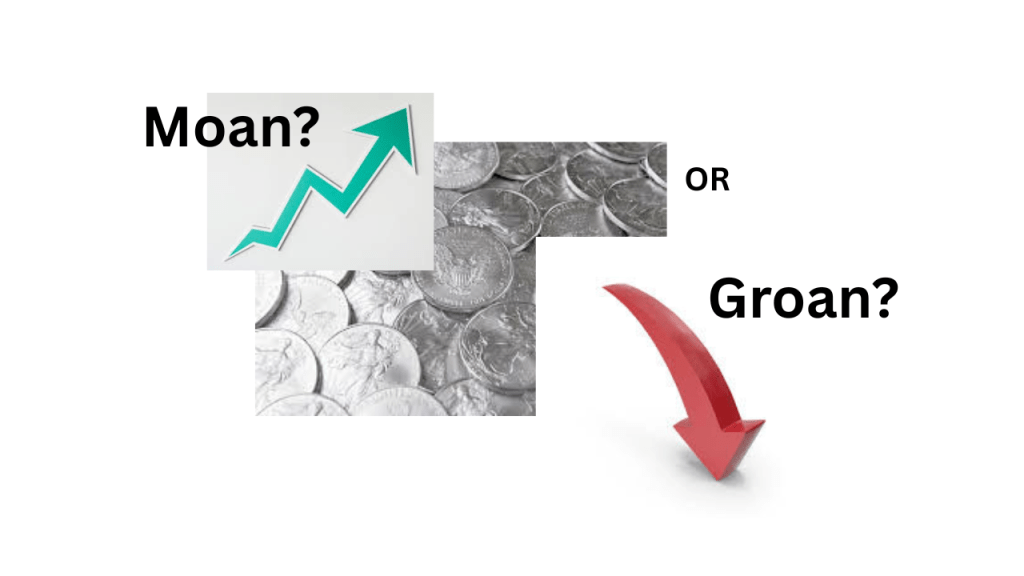
  • Silver. It’s shiny, undervalued, and if you listen closely—it’s screaming for attention. So let’s take a serious look beyond the glint and dig into what’s going on in this peculiar metal’s world. Moan, groan, or speculate—it’s up to you.

    Who’s Actually Producing the Stuff?

    Let’s begin with the players in the silver mining scene. Primary silver producers are a different breed entirely—less flashy than gold majors but facing the same tough terrain. Here’s a representative list of the big names:

    • First Majestic (AG)
    • Fresnillo (FRES-L)
    • Aya Gold & Silver (AYA.TO)
    • Hochschild Mining (HOC-L)
    • Fortuna Silver Mines
    • Hecla Mining
    • Pan American Silver
    • Penoles
    • Polymetal
    • Buenaventura (BVN)
    • KGHM (KPHM)

    It’s worth noting that over 70% of global silver production comes from just six countries: Bolivia, Russia, China, Mexico, Poland, and Australia. That alone should make you pause.

    Where Does It All Go?

    Silver demand is broad and growing. The usual suspects include:

    • Renewable energy (solar panels)
    • Electronics & technology
    • Jewelry
    • Medical equipment
    • Coins
    • Investment-grade bullion

    But wait—we missed something. Something very big.

    The Military Silver Siphon

    Nobody talks about it—but they should. The largest silver-consuming sector isn’t jewelry or solar panels—it’s military use. And here’s the kicker: none of it is recyclable.

    • Every Tomahawk missile launched: ~500 ounces of silver destroyed
    • Every torpedo deployed: ~1,000 ounces gone
    • Drones, guidance systems, high-tech surveillance—silver is embedded, unrecoverable, and increasingly consumed

    As the world ramps up its arsenals, silver quietly disappears into the fog of war.

    What’s Crippling the Producers?

    Primary silver miners share many of the same woes as their gold counterparts:

    • Suppressed and manipulated prices
    • Labor shortages
    • Rising equipment and energy costs
    • Regulatory headaches
    • Hostile jurisdictions
    • Water and environmental constraints
    • Skyrocketing rehabilitation costs

    So we ask: Why would anyone want to be in this business?

    A Critical Material, A Broken Market

    Here’s a truth that few are saying aloud: Silver is a critical material for modern warfare and global infrastructure. But it’s still priced like a shiny trinket.

    So, if you were offered a chance to acquire a critical resource—one being consumed faster than it’s produced—and you could get it at a discount… what would you do?

    You might moan. You might groan. But me? I speculate.

    Final Thought: The 44% Gap No One’s Talking About

    Let’s close with a number that should raise eyebrows:
    In 2024, the structural deficit between silver production and silver demand was 44% of total global production. Let that sink in.

    That’s not a glitch. That’s a gaping hole in the supply chain.

    If war slows, the silver deficit remains. If conflict escalates, the pressure only intensifies. Either way, we are not producing enough.


    Moan. Groan. Speculate. Your move.

    DG

  • by Nick Migliaccio

    There’s a fleeting freshness to information these days—so fleeting, in fact, that its usefulness often has a half-life of about 20 minutes. That sounds about right. Once something is said out loud, especially in the world of fast-moving markets and fast-talking pundits, its edge dulls quickly. If it’s coming from a so-called “credible” news source, odds are it’s already been picked over by the big players, scrubbed clean of its originality, and handed down like day-old bread.

    So, what’s a sharp young or older thinker to do?

    Well, you’ve got choices. You could toe the line, contribute to the success of those already firmly planted at the top, and nod along with the script. Or, you could take the hits that come with thinking for yourself. It’s the classic choice: comfort or clarity. The “road less traveled” might bring wisdom, but it also comes with raised eyebrows and the occasional scorn. And if you dare to walk that path, best to walk it quietly—because secrets don’t stay secret for long, especially if more than one person knows.

    Here’s the thing: believe only what your eyes show you,

    and be suspicious of everything else. Trusting what you hear—especially when it’s shouted through a megaphone—leaves you vulnerable. Nobody gives away profitable secrets without a price. If they do, it’s either not a secret anymore or it’s not profitable.

    So in a world screaming for your attention, try a different approach:

    • Cut through the chaos and spot the real trends—ignore the distractions.
    • Don’t fall for sensational headlines designed to provoke fear or greed.
    • Stay cool-headed while the masses spiral out of control over the news cycle.

    The bottom line? Trust your eyes. Trust your own mind. Gather information with your own effort, through your own sweat. If you didn’t earn it, don’t count on it. Insight isn’t given—it’s ground out, tested, and earned. And its value is directly tied to what you paid for it: time, effort, thought… sometimes even heartache.

    In this 20-minute world, your clarity might just be your greatest edge.

    ©Nick Migliaccio


  • Gold Juniors Crushed

    In the volatile world of mining stocks, there’s a saying that’s ringing loud and clear right now:

    “Gold sneezes, and the Junior miners catch pneumonia.”

    And it’s never been more true.


    What Are Junior Gold Miners, Anyway?

    Junior gold miners aren’t the giants like Barrick or Newmont. They’re not even mid-tier producers.

    They’re the dreamers.

    These companies focus on exploration — staking claims in remote greenfield areas or digging into abandoned brownfield sites, hoping to strike gold. Literally.

    They don’t produce gold (yet). They hope to prove that the land they’re testing has economically viable deposits. If they get lucky — and if they have the money, infrastructure, permits, and partners — they might develop into an actual mining operation one day.

    But statistically? It’s a long shot:

    • Only 1 in 1,000 deposits becomes a mine.
    • Maybe 10 out of 1,000 ever become profitable.

    Why Are Juniors Getting Hammered?

    Here’s what’s crushing the juniors:

    • No gold output → No revenue.
    • Little infrastructure → Everything’s expensive and slow.
    • Unproven management → Few industry veterans leading the way.
    • Drill rigs → Maybe owned, maybe rented, always costly.
    • Financing → Scarce or nonexistent.

    And where are the big names?

    Gone.

    The legendary backers like Rob McEwen (Goldcorp), Eric Sprott, and Pierre Lassonde (Franco-Nevada) are sitting on the sidelines. Even the majors — Barrick and Newmont — aren’t sniffing around the junior space. That’s a warning sign in itself.


    It’s a Numbers Game (And the Odds Are Brutal)

    Let’s be honest: Junior gold miners are some of the riskiest plays in the market. There’s an old industry quote you’ll hear at any mining conference:

    “More money is put into the ground than will ever be taken out of it.”

    Exploration and development cost a fortune. And the odds that you’ll find a deposit, raise enough cash, clear environmental reviews, secure water rights, and still make it profitable? Slim.


    The Real-World Obstacles

    If you’re wondering why junior miners struggle to even get started, here’s a short list of what they’re up against:

    • 🛑 Lack of capital for exploration and drilling
    • 💰 Sky-high equipment costs
    • 🌱 Environmental regulations and compliance
    • 💧 Water management challenges
    • 👷 Shortage of experienced personnel
    • 📜 Bureaucracy and jurisdiction risk
    • 🧪 Geological research and testing
    • 🏔️ Rough terrain and unpredictable conditions

    If you asked Kevin O’Leary what he thinks of junior miners, you’d probably get a quick “No thanks.”


    So… Are They Doomed?

    Not necessarily. Some juniors do succeed. A lucky few strike gold and ride the wave all the way to the top. But most?

    They’re money pits.

    Without deep pockets, powerful backers, or extraordinary luck, the road from discovery to production is more of a tightrope walk over a pit full of expenses.

    Gold might glitter —
    But for Junior miners?
    They’re bleeding just to get a glimmer.


    Like this post?
    ➡️ Share it with a fellow investor.
    📩 Subscribe for more market insights and real talk on mining, gold, and beyond.