• scroll down for the video

    We talk a lot about buying.

    We talk about “breakouts,” and “opportunities,” and “the next big thing.”
    We talk about where the market is going — and what might go up.

    But there is a quieter, harder, and far more important question that rarely gets the same attention:

    When should you sell?

    Because buying may feel like investing —
    but selling is where investing becomes real.


    The Contract We Don’t Like to Talk About

    Every investment is, at heart, an aleatory contract.
    A wager with uncertainty built into its bones.

    You place your capital into the hands of time, chance, and discipline. You hope that you will recover more than you put in.

    Sometimes you do.
    Sometimes you don’t.

    Gerald Loeb once answered the question “When should one invest?” with perfect simplicity:

    “When you have the funds.”

    But the more honest — and more difficult — question comes later:

    When do you step off the ride?


    The Market Whispers First

    Markets do not shout their warnings.

    They whisper.

    Long before a company admits trouble.
    Long before headlines change their tone.
    Long before fear reaches the crowd.

    The stock already knows.

    And it shows that knowledge quietly — through price, momentum, and trend.


    Listening to the Numbers

    A good place to begin is what I call the three S’s:

    Sector.
    Is the broader sector still being invited forward — or is it beginning to stall?

    Selection.
    Is your specific stock still leading — or simply drifting?

    Sentiment.
    Is capital still flowing in — or quietly stepping back?

    These are not predictions.
    They are observations.
    And observations are the bedrock of discipline.


    Trend Is the Market’s Honest Voice

    Trend has guided traders for more than a century — not because it is clever, but because it is honest.

    Trend is commonly measured using moving averages and MACD — tools that smooth noise and reveal direction.

    When price begins slipping beneath its averages…
    When averages roll over…
    When MACD crosses the zero line…

    The market is speaking plainly.

    It is not angry.
    It is not dramatic.
    It is simply changing its mind.

    And it is inviting you to notice.


    The Comfort Warning

    There is another signal — quieter, but equally reliable.

    It is the moment when your investment feels good.
    So good that you speak of it easily.
    So good that confidence becomes comfort.

    That warm, settled feeling has marked more dangerous ground than any chart ever has.

    My best buys usually felt uncertain.
    My worst holds usually felt cozy.

    The market rewards discipline — not attachment.


    Where Profit Is Really Made

    There is no perfect signal.
    No flawless indicator.
    No method that removes uncertainty.

    But trend, momentum, and disciplined observation form a compass that quietly protects capital — and lets profit breathe.

    You do not make money when you buy.

    You make money when you sell —
    calmly, carefully, and without emotion.


    Let the numbers speak.
    Let discipline lead.
    And never confuse comfort with safety.

    — DenaliGuide

  • © Denaliguide 2025

    There are few phrases that soothe a speculator’s nerves like:
    “The coast is clear.”

    Those words promise smooth sailing right as you’re about to embark on a venture. This venture could hurt you badly if not done with care. And sometimes you find out pretty quickly whether that phrase was truth… or wishful thinking.

    I pick a lot of stocks. Some work out beautifully. Some take a hammer to my confidence. And after a few too many blows to the head courtesy of Mr. Market, a question finally lodged itself between my ears:

    “What am I planning for the stocks I buy after I buy them?”

    Not why I like them. Not the story.
    The plan.

    So here goes.


    When the Coast Seems Clear

    Every now and then, you enter a trade that behaves exactly as you hoped. The trend is friendly, the movement is steady, and the progress feels like getting daily base hits. You accept that the stock is in an uptrend, and you allow the facts—not your euphoria—to guide you.

    That’s when the phrase “the coast is clear” seems to be true.
    But here’s the twist:

    Even when everything goes right, you still need a plan.

    Because without an exit strategy, even winning trades can turn into headaches. Being right isn’t enough—you need to know what you’re doing with that correctness.


    When the Coast Is Foggy, Swampy, or Full of Crocs

    Then there are the trades that look promising but never deliver.

    The ones where you say things like:

    • “It has potential.”
    • “It might turn around.”
    • “Maybe next week.”

    That kind of thinking is hope.
    And hope is the most expensive tool in the toolbox if it’s all you’re relying on.

    You enter early without a written plan. You assume the best. Then the stock cuts itself in half within weeks, repaying your faith. Now you’re stuck asking two painful questions:

    1. How long do I wait for improvement?
    2. At what point do I admit error and exit?

    If you didn’t decide those things before buying, you’re now making decisions under stress—never ideal.


    The Awkward Middle: Not Winning, Not Losing

    Some trades sit right on the horns of the dilemma.
    Not rising enough to justify excitement.
    Not falling enough to justify panic.

    Just drifting.

    This is where measurable expectations help. You can look at average movement, recent performance, or your own time-based criteria and say:

    “If this position can’t show signs of life within X days or weeks, I reevaluate.”

    That simple discipline keeps you from babysitting weak trades indefinitely.


    Why Bother With All of This?

    Because getting into a trade is easy.
    Getting out—with your money intact—is the hard part.

    And that’s why you must ask:

    • Was this according to my plan?
    • Did I even have a plan?
    • Did I buy it simply because it felt like the “coast was clear”?

    Too often, “the coast is clear” is just code for:
    “I didn’t think this through.”

    I won’t give you quotes from Sun Tzu or fictional generals sitting in tents. It all boils down to the simplest of questions:

    What are you going to do with the fish once it’s in the boat?

    Successful speculation in anything—rice, copper, coal, stocks—requires reverse engineering your plan:

    • What must be true before you buy?
    • What must happen after you buy to justify holding?
    • When do you take profit?
    • When do you accept a mistake and walk away?

    And perhaps most importantly:

    Is the coast actually clear, or are you just hoping it is?


    The Transaction Sheet: Your Lifeline

    You can simplify everything by creating a Transaction Sheet you fill out before you make the trade.

    The two most important pieces:

    1. WHY BUY?

    Your thesis, in plain language.
    If you can’t explain it quickly, you likely don’t understand it well enough.

    2. WHY or WHEN TO EXIT?

    Decide this before emotions get involved.
    It will save your wallet and your sanity.

    Then add the housekeeping:

    • Stock name
    • Shares
    • Price in
    • Price out
    • Profit target
    • Maximum acceptable loss
    • Time expectations
    • Any red flags to watch

    Those boring details? They are the backbone of successful speculation.


    Your Four Allies in the Market

    When the noise gets loud and the market gets fast, these are the friends you can rely on:

    • WHY’s — Why you enter, why you exit
    • WHEN — Timing and conditions
    • DUE DILIGENCE — The work you did before risking a dime
    • HOUSEKEEPING — The numbers that keep you honest

    Get those right, and suddenly the coast isn’t just “clear”—
    it’s mapped, measured, and monitored.

    And that’s the difference between guessing…
    and surviving long enough to succeed.

    From the Denali ridges to the market edges—step sure, think clean, trade wise.

    Nick aka Denaliguide

  • By DenaliGuideX

    Markets are not polite places.
    They’re not libraries, gardens, or yoga studios.
    They’re wild ecosystems — full of predators, scavengers, tricksters, and the occasional honest creature trying to make a living.

    If you’re an investor, you’re not simply reading tickers and watching charts.
    You’re navigating a landscape. Your senses include your eyes, your ears, and your instincts. They can make the difference between survival and becoming someone else’s groceries.

    This post expands on today’s video: “Eyes & Ears: The Creatures of the Market.”
    Let’s dive deeper.


    👀 Your Eyes: Seeing Through the Market Smoke

    There’s an old Eagles line that should be carved into every investor’s desk:
    “You can’t hide your lying eyes.”

    But the markets will sure try.

    Today’s financial environment is filled with legerdemain — quick hands, fast talk, and sleight-of-mind.
    Tech-driven speed (HFT) is still here. Front-running tactics persist. Gas-lighting is disguised as expert commentary. Outright cheating remains. They all wear a modern coat of paint.

    Gas-lighting is the most common.
    It convinces you not to trust what you see on the chart, in the reports, or in your own gut.
    Instead, you’re told to trust “experts.”
    Experts who get paid whether you make money… or don’t.

    Remember:

    You are not “The House.”

    And the House always wins.

    So use your eyes.
    If it looks wrong — there’s a reason.


    👂 Your Ears: Listening for What’s Left Unsaid

    But sight alone won’t save you.
    Investing is a multi-sensory task.

    Your ears matter just as much.

    Correct due diligence demands you leave at least a 30% margin for missing or inaccurate information. The markets never give you the whole picture, and if you pretend they do, you’re setting yourself up for pain.

    Let me share something from the 1970s Gold Uptrend.

    I lost a year of investing time. I also lost five figures in profits. It was not because my stocks were bad. It happened because my brokerage went down after shorting gold stocks they didn’t even own. The whispers on the street warned of trouble… and I ignored them.

    That mistake cost me — and it taught me something:

    If you hear whispers, pay attention.

    “Buy the rumor, sell the news” only works because human beings can’t keep secrets.
    If more than one person knows… the secret is already halfway out the door.


    🪳 Cockroaches & 🦉 Owls: When One Red Flag Means Many

    Jamie Dimon once said:
    “If you see one cockroach… there’s never just one.”
    He wasn’t wrong.

    Cockroaches in the financial world include:

    • unexplained losses
    • delayed filings
    • vanishing auditors
    • sudden leadership changes
    • waffling language in quarterly reports

    If you see one — assume ten.

    Then there are the Owls — big, silent, predatory forces.
    Take Blue Owl Capital’s troubles when rumors of merging their flagship with weaker funds leaked.
    Secrets like that don’t stay hidden.
    They spread on wings.

    Owls remind us:

    When big players shift uncomfortably in the dark, something is coming.


    🪶 Ravens & 🐺 Trickster Coyotes: Wisdom and Deception in the Wild

    Ravens are the geniuses of the bird world.
    In nature, trailing a raven can lead you to food…
    or straight into an ambush.

    Some market players operate exactly the same way.
    Their movements can be signal or deception — and knowing the difference is what separates survivors from prey.

    Then we have the Trickster Coyote.

    Coyotes will yip and yap like they’ve made a kill, luring you into a rush.
    You leap ahead. The trickster slips away. Suddenly, the pack is behind you. They are eyeing you as the meal.

    The modern investing version?

    • sudden hype
    • “too good to be true” stories
    • artificial price spikes
    • manufactured excitement
    • loud “hot tips” spreading too fast

    If you see the trap forming, step back — fast.


    🛡️ Your Senses Are Your Defenses

    Investing isn’t war…
    except when it is.

    Some competitors are honest.
    Not all.

    And every single day, you’re in a battle for your financial survival.

    So guard yourself.
    Gird yourself.
    And above all:

    Do your own due diligence. Every time. No exceptions.

    Your eyes will warn you.
    Your ears will whisper the truth.
    Your instincts will let you know when something stinks.

    Trust them.

    Because in this market, you’re either the hunter…
    or someone’s groceries.


    If you found this helpful, make sure to:

    ✔️ Watch the companion video on DenaliGuideX
    ✔️ Subscribe for weekly market wisdom
    ✔️ Share this with an investor who needs sharper senses

    Stay alert.
    Stay sharp.
    Stay alive out there.

    Nick aka DenaliGuide

  • There’s an old saying that trouble always has room to pull up a chair.
    Markets, like life, seem to prove that true every day.
    We tell ourselves, “It couldn’t get any worse,” only to find the next headline ready to challenge that assumption.

    In the world of investing, three familiar culprits (or companions) show up again and again: Sentiment, Sector, and Stock.
    Let’s unpack each — and see whether they’re your allies or adversaries.


    Sentiment — The Emotional Barometer

    Sentiment is that murky space between fact and feeling.
    It’s what drives market chatter, propels bubbles, and fuels fear.
    You’ll hear it phrased as, “Gold is dead money,” or “AI is unstoppable.”

    But here’s the thing: sentiment without support is just noise.
    When grounded in data and documented trends, it becomes a useful signal.
    Consider Mali — where government action to nationalize mining operations sent shock waves through investors.
    That shift wasn’t about emotion; it was about evidence.

    Unchecked, sentiment can distort judgment.
    However, if you observe it carefully, it becomes a market temperature gauge. It helps you spot when things are too hot or too cold to touch.


    Sector — The Rising (or Falling) Tide

    If sentiment is emotional weather, sector is the climate.
    It shapes everything beneath it.

    Studies suggest that as much as 80% of a stock’s movement can be explained by the sector it lives in.
    If you’re invested in a rising tide, nearly every boat in the harbor floats higher. Consider, for example, steel after improving efficiency. Another instance is AI at the height of its cycle.
    But when the tide turns, even the best-run company can run aground.

    Sector choice isn’t guesswork; it’s research.
    Follow regional policy changes, regulatory shifts, and global demand patterns.
    This is where your Due Diligence pays off. It’s not about predicting the future. It’s about spotting where the next current is to flow.


    Stock — The Micro Within the Macro

    Once you’ve chosen a sector, the work narrows.
    Now comes the forensic part: analyzing the stock itself.

    Capital structure, dilution habits, management integrity, beta, balance sheets — these are the fingerprints of a company’s character.
    But even that isn’t enough. You must watch how the stock behaves in its environment.
    Does it lead when others lag?
    Does it recover quickly after corrections?
    Market behavior often tells you more than the footnotes.

    Technical analysis, when paired with solid fundamentals, can reveal the pulse of a company — not just its paperwork.


    Friend or Foe?

    The truth is, the Three S’s aren’t inherently good or bad.
    They’re tools — sometimes sharp, sometimes dull — depending on who wields them.

    • Sentiment shows where hearts and headlines are drifting.
    • Sector tells the story of broad opportunity or risk.
    • Stock reminds us that details matter most in the end.

    Ignore one, and you limit your perspective.
    Master all three, and you sharpen your edge.

    Investing isn’t about crushing every challenge; it’s about reading the terrain and walking carefully — like crossing cobra country barefoot.
    Stay skeptical. Stay observant. And remember: “Show me, don’t tell me.”


    🎥 Watch the Interview

    Catch the full conversation on YouTube:


    📬 Join the Conversation

    Subscribe to the No Dirt Letter for insights that go beyond the headlines. It is where sentiment meets strategy. It is also where research meets real life.

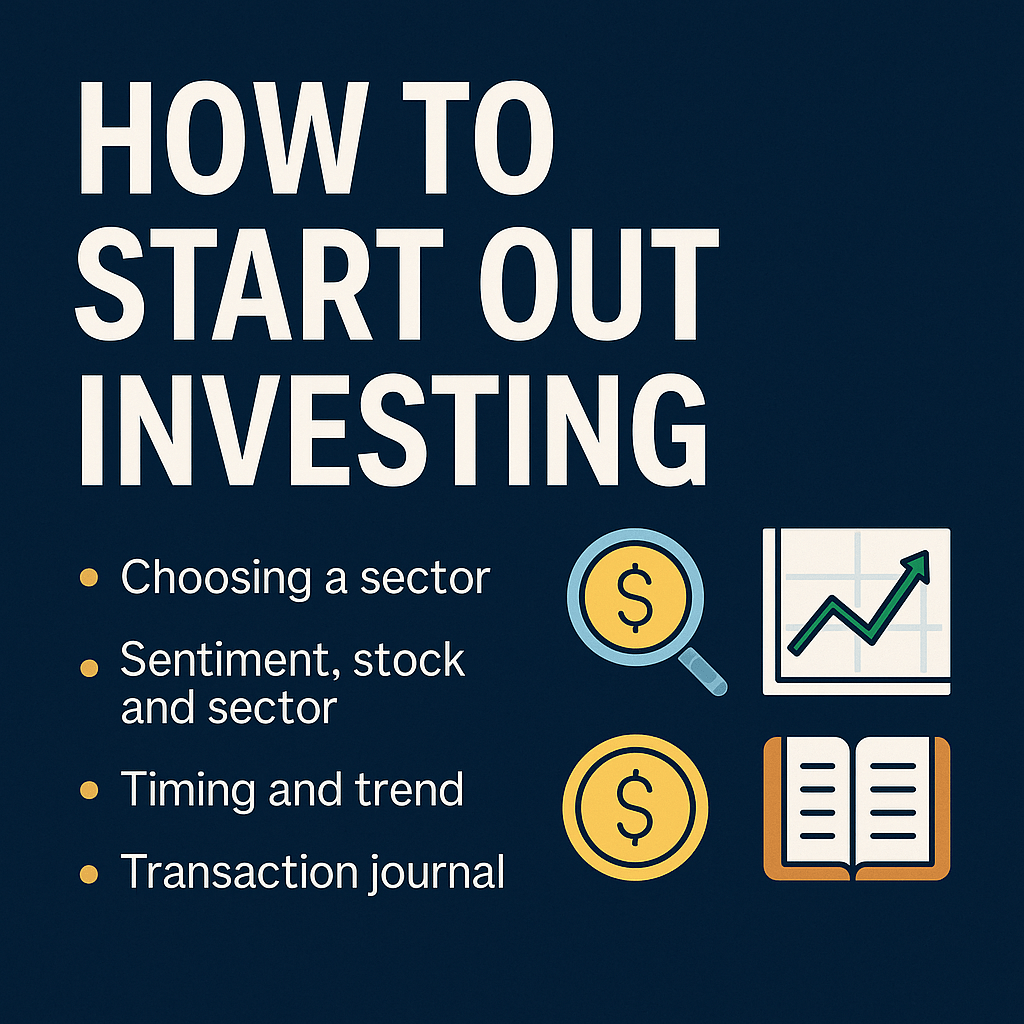
  • So, you’ve decided to start investing. That’s a good start. Before diving in, focus on the specifics of your chosen sector. This includes areas like precious metals.
    You’ll hear this often: “Do your own due diligence.” That’s not just a cliché — it’s the marching order you give yourself before placing any trade.

    Let’s unpack what that really means. (scroll down for the video)


    Start with a Clear Head — and Ignore the Noise

    You will experience a lot of excitement when you first step into investing. There will be promises that AI is your ticket to getting rich. You also hear that this stock will go to the moon.
    Ignore it. Those distractions rarely lead to good outcomes. Investing isn’t about hype; it’s about building understanding and forming habits that help you find real value.


    The Three S’s of Sensible Investing

    Over time, I’ve found there are three “S” words that can guide any investor: Sentiment, Stock, and Sector.

    1. Sentiment

    This isn’t about emotions — it’s about the general feeling in the market. You’ll hear people say things like:
    “I like Phillips Petroleum for a long investment.”
    or
    “Nucor Steel could have a good run coming.”
    Those are expressions of sentiment — opinions that can sway markets in the short term. However, they shouldn’t define your decisions.

    2. Stock

    Each stock has its own story. It reflects not just numbers but also leadership, balance sheets, and the business’s ability to adapt. You’ll research it, read reports, and get familiar with how it behaves within its space.

    3. Sector

    This is the big one. As Jim Cramer once said, “Eighty percent of what a stock does is determined by its sector.”
    That means the sector’s direction often matters more than the company’s specifics.
    Take Peabody Coal (BTU) — when coal was politically disfavored, the stock fell. When the administration shifted, it rose again. The company didn’t change overnight — the sector’s winds did.


    Timing and Trend: The Often-Misunderstood Pair

    Two other words that can make or break investors are Timing and Trend.
    Many people worship “the trend” and curse “the timing,” but I regard them as equals.

    • Get the timing wrong, and you’ll take losses.
    • Catch the trend early, and it becomes your friend.
    • Ride the trend too late, and it can turn against you fast.

    The key is to respect both — and to define what short term and long term mean for you.
    Maybe short-term means three months or less, while long-term could stretch into years. Write that down. Be consistent.


    Keep a Transaction Journal

    One of the simplest and smartest tools I use is a Transaction Recap Journal.
    Each entry includes:

    • Date opened
    • Goal or expectation
    • Exit plan — next week, next month, next quarter

    That small habit keeps non-performing trades from turning into long-term mistakes. It helps you close a losing position early rather than letting it sink your portfolio.


    Back to Basics: Sector, Category, and Project

    If you’re focusing on precious metals, narrow it down:

    • Metal: Gold, Silver, Copper
    • Group: Producers, Developers, or Explorers

    The sector trend will pull them up or down together, but within that, the group defines your risk and reward.

    For example, reading a company’s PEA (Preliminary Economic Assessment) tells you:

    • What’s in the deposit
    • How much production is expected
    • How long the mine might last

    You don’t need to be a geologist — just curious enough to read what’s publicly available and understand the basics of the business you’re investing in.


    The Bottom Line

    Starting out in investing isn’t about gambling or chasing trends.
    It’s about learning the rhythm — how sentiment, sectors, timing, and trends interact.
    Keep records. Respect your plan. Don’t get caught up in hype.

    Whether you choose gold, energy, or tech, remember: it’s not just what you invest in. How you think about investing determines your success.


    💬 From Denaliguide

    At Denaliguide, we believe good investing begins with discipline, not luck.
    If this helped you, follow our weekly insights. We continue exploring sector dynamics, commodity cycles, and sound portfolio habits. These habits help real investors stay grounded in volatile markets.

  • (By DenaliguideX)


    The Markets Are Moving—But Nowhere Fast

    If you’ve been watching the markets lately, you might feel like you’re drifting without a compass. Everything is in motion, yet nothing seems to be going anywhere.

    Last week, major indexes dropped roughly 3% on regular volume, shaking investor confidence. This week, we’ve seen a tentative rebound — about half those losses regained, but with no conviction behind it. Bond markets were closed, Canada’s markets too, leaving investors suspended in uncertainty.

    Gold and silver are both up provisionally. Copper is holding positive ground. Uranium, along with nuclear energy stocks, continues to climb. Meanwhile, oil has slipped lower, quietly hinting at slowing demand or a shift in sentiment.

    Everything investors want to buy has already run up. And what hasn’t? It looks… risky.

    Welcome to the market in limbo — not quite bull, not quite bear. It’s the uneasy middle ground that tests your discipline more than your portfolio.


    Gridlock, Chaos, and the Channels of Purgatory

    You could call it chaos. You could call it gridlock.

    But as Nick from DenaliguideX puts it, these aren’t “The Straits of Hell” — they’re the Channels of Purgatory. The place between extremes where traders pace the deck and investors hold their breath, waiting for a signal that never quite comes.

    In this in-between zone, fear and frustration start to replace analysis. Some investors freeze, afraid to act. Others chase whatever is still moving, hoping for one more surge.

    Neither approach works.

    Because limbo isn’t a time to panic — it’s a time to position.


    What Serious Investors Do in Limbo

    When markets stall, the noise gets louder. Headlines turn dramatic. Everyone wants to know what’s next.
    But surviving limbo isn’t about prediction — it’s about preparation.

    Here’s what disciplined investors are doing now:

    1. Staying Liquid

    Cash is not trash — it’s flexibility. When the market is uncertain, liquidity gives you room to maneuver. It’s not about timing the market; it’s about being ready when value returns.

    2. Reassessing Exposure

    Everything that’s already run — gold, uranium, copper — has priced in good news. That doesn’t mean dump your winners, but it is time to trim positions and rebalance. Take profits strategically.

    3. Watching Yields Closely

    Bond yields are the heartbeat of the market. Even when the bond market is closed, yield trends tell you how nervous or confident money really is. When yields calm down, equity markets usually follow.

    4. Reaffirming the Long View

    Limbo markets don’t last forever. Eventually, conviction returns — often when the headlines are most confusing. That’s why your long-term plan matters more than ever right now.


    The Emotional Trap of Limbo

    A market in limbo can feel like a test of endurance. Every day seems to bring mixed signals — gold up, oil down, stocks flat, sentiment swinging like a pendulum.

    The temptation is to do something. To move money just to feel in control. But that’s the emotional trap — and it’s how investors lose more in indecision than in downturns.

    Patience is not the same as passivity. Patience is discipline. It’s knowing that not every moment demands action.

    As DenaliguideX often reminds viewers:

    “When the markets go silent, that’s when serious investors start listening.”


    Signals to Watch for the Next Turn

    Eventually, the fog clears. And when it does, it happens fast.

    Here’s what will tell you that limbo is lifting:

    • Volume returning — not from speculators, but from steady institutional buyers.
    • Gold and copper holding gains while broader equities rise.
    • Oil stabilizing at sustainable levels, signaling renewed economic confidence.
    • Yields leveling — not spiking, not collapsing. Just calm.

    That’s the moment to reengage — not because you’re chasing, but because conviction has returned to the market.


    Final Word: Purgatory Has Purpose

    It does not feel like it now, but these “channels of purgatory” serve a purpose. They flush out excess, temper greed, and test resolve.

    Investors who survive limbo don’t do it by predicting what’s next. They stay prepared, informed, and emotionally steady.

    The market may be gridlocked, but your strategy doesn’t have to be.

    “Stay informed, not inflamed.”
    Nick, DenaliguideX


    📣 Closing Thought

    Markets move in cycles, but mindset makes the difference.
    So, take a breath. Stay liquid. Protect your capital.
    And when conviction returns — you’ll be ready to move with it, not chase after it.

    he market may be in limbo — but your strategy doesn’t have to be.
    Take a moment to review your positions, breathe through the uncertainty, and focus on fundamentals.

    If this conversation helped you see the bigger picture, hit like and subscribe. Share it with a fellow investor who’s navigating the same uncertain waters.

    Stay informed, not inflamed — and keep your compass steady.
    🪙 Join us weekly on Denaliguidesummit for grounded insights into gold, markets, and the mindset behind real investing.

  • Here we go. I’ve left out coal mining—its history is replete with accidents and disasters, especially underground. The human and animal toll from tunnel mining coal is probably incalculable since the practice began.

    But let’s look at hard-rock mining. When you move this much dirt and rock, some of it will move the way it wants.


    Agnico Eagle

    One of North America’s premier gold miners with savvy management—but Lady Luck spares no one.

    • 2003 & 2018: Cave-ins at the LaRonde Mine due to ground conditions. Both times: major costs and lost production, but no casualties.
    • GoldEx Mine: Another cave-in, similar results—production halted, but no lives lost.

    Aurcana Corp

    • 2021: Their developing mine at Shaffer, Texas, collapsed so completely it was abandoned. Again, no casualties, but the project was lost.

    Kennecott Copper (Rio Tinto)

    • 2013: A huge wall collapse at the Bingham Canyon open pit in Utah. Spectacular in scale, devastating to production—but no injuries.

    Vale & BHP (Samarco)

    • 2015: Joint-venture tailings dam failure in Brazil. Widespread downstream damage to people, animals, and ecosystems. Both companies are still paying legal damages.
    • 2019: Another Vale tailings dam collapse in Brazil. Enormous legal fallout, though miraculously no direct human casualties.

    CODELCO – Chile’s National Copper

    • 2015: An earthquake triggered a cave-in at the El Teniente mine. Six miners were killed, and the mine lost a year of production alongside heavy facility damage.

    Freeport-McMoRan

    • 2025: Grasberg mine in Indonesia suffered a mine wall slump and wet-earth clogging. No casualties, but operations disrupted.

    Imperial Metals

    • 2014: Tailings pond breach at Mt. Polley, British Columbia. The ecological and legal consequences are still unfolding years later.

    Boliden (Sweden)

    • 1998: Tailings breach in Spain.
    • 2000: Another similar breach. Both caused lasting environmental harm.

    Ongoing Rumors

    As I type this, word is circulating of a possible cave-in at Aris Mining’s Segovia operations in Colombia. This is unconfirmed. However, if verified, it will add to the list of reminders that the earth does not always cooperate.


    Closing Thought

    Mining reshapes mountains, valleys, and river systems. For all the engineering, planning, and management, sometimes the ground asserts its own will. When you move this much earth, there are always risks—and history keeps the ledger.

    As investors and observers, it’s easy to focus on the numbers—ounces poured, costs per ton, share price. But the truth is, mining is a dialogue with the earth itself. Sometimes it gives, sometimes it takes back. Every cave-in, every tailings breach, and every wall slump is a reminder. Geology is not a servant, but a partner. It is one we must approach with respect.

    Stay alert, stay informed, and remember: when the ground moves, it tells a story.

    — Nick, Denaliguide

  • Theme: Ground Truth vs. Market Noise

    From “Acts of Earth” to “Manipulation With & Without Trends”—what really moves mining stocks, and how to protect your capital.


    Editor’s Note

    This month, Nick zoomed out from day-to-day price flickers to the bedrock: operational reality and market structure. Two anchors emerged:

    1. Operational risk is real—and it shows up suddenly.
    2. Price action is a stage—and not every movement is “true demand.”

    Together, they form a simple mandate: separate geology and cash flow from tape-driven drama. Below you’ll find fast summaries, key takeaways, and practical checklists to help you act with clarity.


    Table of Contents

    1. Feature: Acts of Earth—Operational Risk Casebook
    2. Deep Dive: Manipulation With & Without Trends (Interview notes)
    3. The Sentinel Dashboard Nick watches (and why)
    4. Toolkit: Speculator vs. Investor—Know Your Hat
    5. Community Corner & Action Steps
    6. What’s Coming in October

    1) Feature: Acts of Earth—Operational Risk Casebook

    (Long-form note, Sept 23)

    What Nick covered:
    A quick tour of real-world disruptions—no hype, just facts—to show how mine plans meet geology:

    • Agnico Eagle – LaRonde (2003 & 2018): Ground conditions caused cave-ins; production lost, no casualties.
    • Agnico Eagle – Goldex: Another cave-in; again no casualties, but meaningful operational impact.
    • Aurcana – Shafter (2021): Development collapse led to abandonment; no casualties.
    • Kennecott Copper (2013): Massive open-pit wall failure; a stark reminder that scale doesn’t erase risk.

    Why it matters:

    • Operational uptime is valuation. A single geotechnical event can erase quarters of planned cash flow.
    • Balance sheets buy time. Strong liquidity and flexible mine plans cushion shocks.
    • Risk ≠ doom. The absence of casualties in these cases underscores modern safety progress, even when economics take a hit.

    Use this when screening:

    • Read the latest geotech & geomet commentary in MD&A/technical reports.
    • Stress-test your thesis with downtime scenarios (e.g., “What if throughput drops 20% for two quarters?”).
    • Prefer teams with redundancy (multiple mines, diversified orebodies) and access to capital.

    Read the full post → [Link to “Acts of Earth”]


    2) Deep Dive: Manipulation With & Without Trends

    Core idea: Markets can be “pushed,” but the push behaves differently inside a trend versus against it.

    Key distinctions Nick drew:

    • With the trend: Liquidity waves amplify moves. Narrative + flows = overshoots are common.
    • Against the trend: Efforts fade faster. You’ll often see sharp pops that fail on declining volume.
    • Micro vs. macro: Tape tricks may skew days or weeks; fundamentals decide quarters and years.

    How to defend yourself:

    • Track volume + breadth (are more names participating, or just a few large caps?).
    • Respect levels where real money acts (prior financing prices, long basing areas).
    • Scale in/out using pre-committed tranche sizes; don’t chase your emotions.
    • Keep a small “probe” size to test whether a move has follow-through before sizing up.


    3) Nick’s Sentinel Dashboard (concepts to watch)

    • Royalty/Streamer Health: If the cash-rich, diversified names roll over, the juniors usually feel it next.
    • Gold/Silver Ratio: Regime hints. Sustained decline often pairs with risk-on in silver/juniors; rising ratio = caution.
    • Real Yields & DXY: Higher real yields and a strong dollar pressure precious metals; turning points can unlock upside.
    • Breadth in Juniors: Are breakouts broadening or narrowing? Persistent narrow leadership is fragile.

    (Note: These are process tools, not predictions. Use them to frame risk, not to force trades.)


    4) Toolkit: Speculator vs. Investor—Know Your Hat

    Investor Hat

    • Horizon: multi-year.
    • Focus: margin of safety, jurisdiction, balance sheet, repeatable FCF.
    • Moves: buys dips into value; trims on valuation stretch.

    Speculator Hat

    • Horizon: days to quarters.
    • Focus: catalysts, sentiment, liquidity, tape structure.
    • Moves: enters on setup, exits on target—no marriage.

    Blended Approach

    • Core positions (Investor) + Trading sleeve (Speculator) in the same name only if you keep separate entries, targets, and notes.


    5) Community Corner & Action Steps

    This month’s prompt:

    Where did operational reality surprise your thesis—for good or ill?
    Reply to this email or drop a note in the comments; we’ll feature a few next month.

    Action Steps (15 minutes):

    1. Pick your top 3 holdings. Write one “Acts of Earth” risk each (geotech, permitting, processing).
    2. Define your Trend Test: which 2 indicators will you watch weekly (e.g., breadth + real yields)?
    3. Decide your hat for each position (Investor vs. Speculator) and set matching rules.

    6) Coming in October

    • Risk Management, Pt. 2: Building position size like a pro (volatility-based tranches + max loss rules).
    • Mailbag Special: Your best questions from September (send them now!).

    • Subscribe to DenaliGuideX on YouTube → [Click here]

    Final Word

    Markets will always tell stories. Orebodies tell the truth. This month was about hearing both—clearly—and acting accordingly.

    With steadiness,
    Nick & Doll
    DenaliGuideX

    Educational content. Not investment advice. Do your own research and consider your risk tolerance before acting on any ideas here.

  • Setting the Stage

    By Denaliguide

    Scroll down to see the interview

    Markets rise and fall like the ocean’s tide. Sometimes the pull is gentle, other times it’s a surge that sweeps away anyone not anchored. Since 2012, I’ve noticed that these tidal-like cycles have grown more powerful. They are recurring waves of speculation and investing. These cycles shape not only precious metals and mining stocks but also the broader economic landscape.

    The question isn’t whether the tide exists. It does. The question is whether we recognize where we are in the cycle. Can we ride it instead of being dragged under?


    What Do We Mean by Tidal Cycles?

    When I talk about tidal-like cycles, I’m pointing to market rhythms that move with regularity and force. Unlike short-term noise, these cycles stretch across years, sometimes decades, carrying with them momentum that investors ignore at their peril.

    Think of the metals markets: when the tide is rising, gold and silver seem unstoppable. When it turns, even the best miners struggle to keep their heads above water.


    Why 2012 Was a Turning Point

    So why start in 2012? That year marked the crest of a massive wave in precious metals, with gold peaking above $1,900. It also marked the beginning of a new era of central bank intervention. Quantitative easing and near-zero interest rates flooded the global financial system.

    From that point, the cycle shifted. Mining stocks — especially the juniors — were pulled into a long ebb tide. They were starved for capital and struggled for survival. At the same time, speculative money sought new shores: tech, crypto, and beyond.

    The tide had turned, and few recognized it in time.


    Winners and Losers in the Waves

    Every tidal cycle creates winners and losers. Those who spotted the outflow after 2012 protected their capital, waiting for the next inflow. Those who didn’t were left stranded, holding stocks that sank when the tide pulled out.

    Agnico Eagle, Franco-Nevada, and Wheaton Precious Metals represent firms that managed the cycle with discipline. They adapted their sails to the wind. Many juniors, by contrast, never survived the low tide.

    The lesson is clear: tidal cycles don’t care about our hopes. They reward discipline and punish denial.


    Beyond 2025: Where Are We Now?

    So, where are we today? In my view, the tide is rising once again. Precious metals are regaining strength, mining stocks are waking up, and geopolitical currents are stirring the waters.

    Are we near the crest? Or just at the start of a long incoming tide? That’s the debate. What’s certain is that volatility will be our companion. Those who read the tide well may find themselves carried farther than they imagined.


    Final Thoughts

    As investors, we don’t control the tide. But we can learn its rhythm, respect its power, and position ourselves to move with it rather than against it.

    🌊 The tide is moving. The question is — are you ready to ride it?


    What do you think? Are we at the crest of this tidal cycle, or only just beginning the rise? Share your thoughts in the comments. Subscribe to Denaliguide for more insights into speculation, mining, and the cycles that shape our financial world.