
August 7, 2025, @Denaliguide
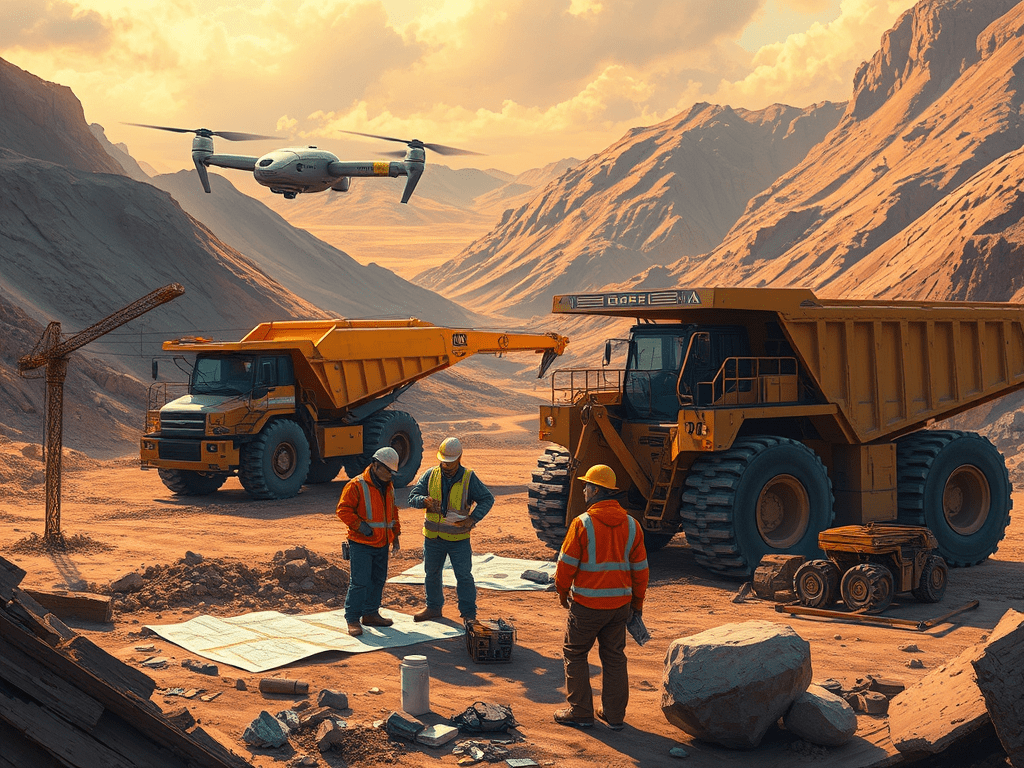
Mining has always been a dance between vision and reality. It involves the promise of what lies beneath the ground. It also involves the hard, measurable facts of what it takes to get it out. We can identify four broad categories if we break the industry into its core drivers. These categories are shaping modern mining. Scroll down for the accompanying video.
1. People
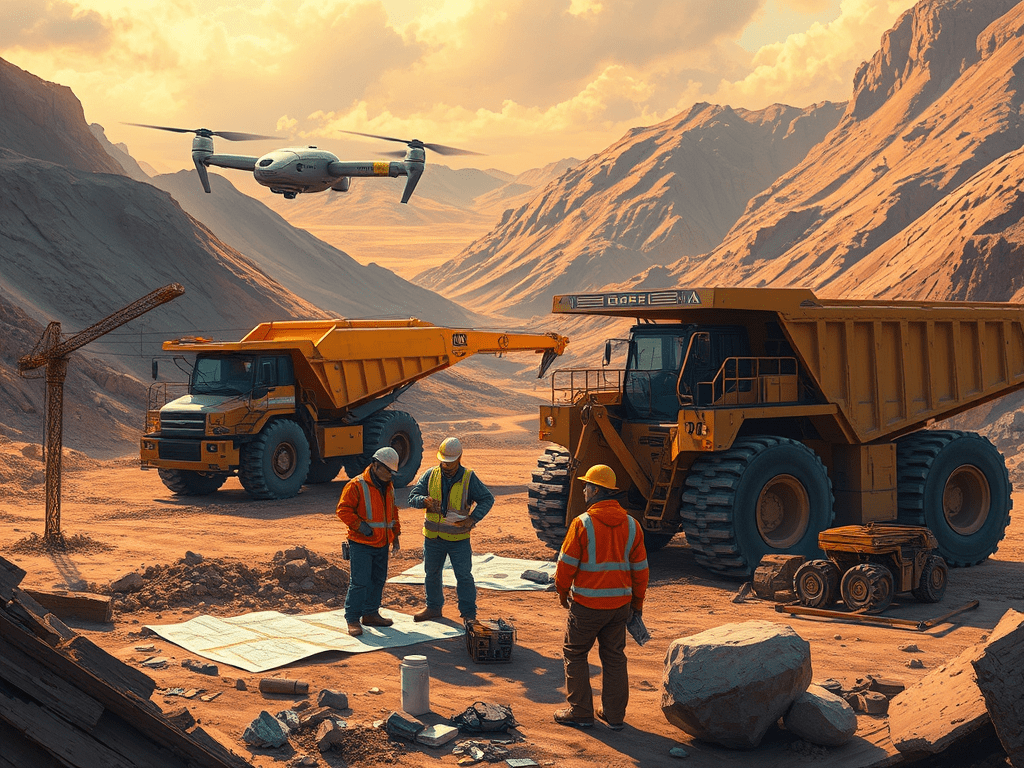
- Leaders: Princes, officers, regulators — the decision-makers and deal-makers.
- Experts: Geologists, geo-techs, logisticians, pilots, heavy equipment operators, engineers.
- Costs & Risks: A heli-pilot costs about $300 per hour. Geo-techs earn $200–$300 per day. Their work is physically demanding and often hazardous. Yes, bears are included in the risks.
2. Land & Deposits
- Acquisition: Finding, staking, claiming, and securing the legal rights to mine.
- Maintenance: Ongoing obligations to keep claims in good standing.
3. Mechanical
- Heavy earth-moving equipment: bulldozers, crawlers, mobile drill rigs.
- Transport helicopters: $5,000/hour for a Chinook heavy-lift, $700/hour for a Bell or Huey.
- Cessna 208 survey planes: $700/hour for mag, grav, and IP surveys.
- Mine haul trucks: several million dollars each.
4. Intangibles
- Permits: Water, waste, environmental bonds.
- Surveys: Magnetic, gravity, induced polarization, soil, and water studies.
- Costs: Soil & water surveys at $4,000/km, VTEM at $500/km, diamond drilling at $175/m, DTEMI surveys at $15,000 each.
As the saying goes:
“The stories might lie, but the numbers never do.”
Exploration requires multiple surveys. It also needs equipment and personnel. As a result, exploration budgets can easily hit a million dollars. This is before a single ounce of ore is mined.
A Tale of Two Sites
At Kinross Fort Knox mine, the operation is well-established. Walking past the supply stores, I’ve seen three to six geologists. A couple of logisticians are gathered around a wall-sized map. They are plotting the next blast to maximize ore recovery. That’s about $1,000 an hour in skill, deciding where the next load will go to the crusher.
By contrast, Elephant Mountain, owned by END, is still in exploration. There’s no shortage of gold — I’ve held samples in my own hand (and, reluctantly, handed them back). But progress looks different here.
END purchased the former Placer Dome property for over $500,000. They expanded the land package to double its acreage. This was an investment of around $1 million before exploration even began. Then came soil and water surveys, VTEM, gravity, and magnetic studies across 40 square miles. Drill rigs and bulldozers had to be deployed. Their financing suggests they’ve spent around $36 million on this site so far.
Where’s the Progress?
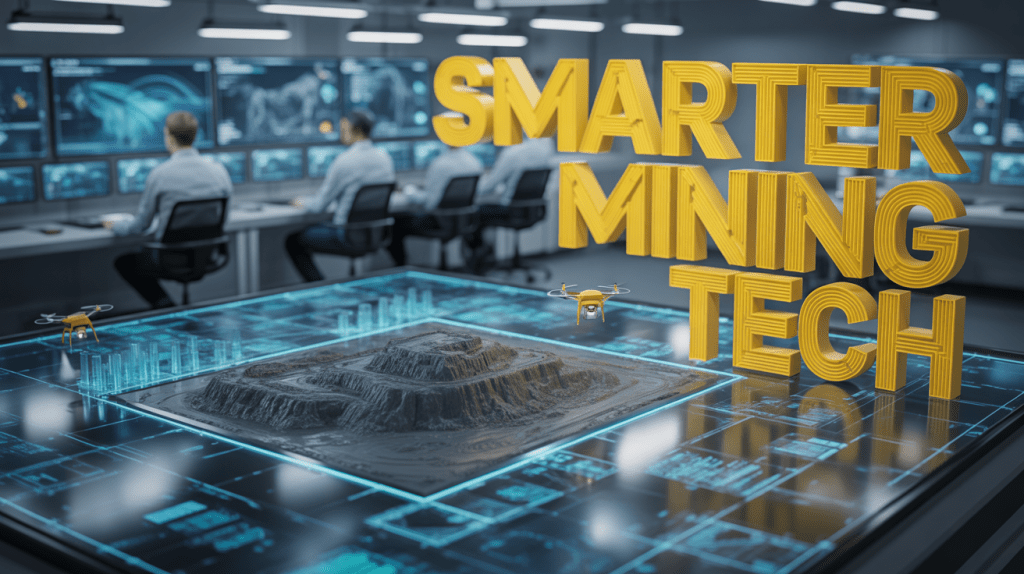
The game-changer is technology, specifically AI and drones.
- The Drone Effect: Survey costs are now 20–25% lower compared to manned aircraft.
- Data Transmission: Results go directly to data centers, reducing delays and errors.
- Layered Analysis: Each survey layer is summarized and overlaid with the next.
- AI Integration: Chief geologists can ask for AI-generated categories like Probable, Possible, and Unlikely. Factoring in logistics and terrain, AI further refines these into:
- Probable & feasible
- Uncertain but feasible
- Not promising
The Bottom Line
Mining is still about people, land, machines, and intangibles — but AI is accelerating progress. It’s helping companies like END make better, faster, and more cost-effective decisions. The gold doesn’t come out of the ground any easier. Yet, knowing where to look has never been more precise. Finding where not to look is also more precise than ever.
Until next time, keep your pans in the stream. Keep your eyes on the data. In mining, the gold is in the details.
What do you think—will AI and drones reshape the future of mining, or are we just scratching the surface? Let me know in the comments!
Nick, aka Denaliguide
 Denaliguide Summit
Leave a comment