
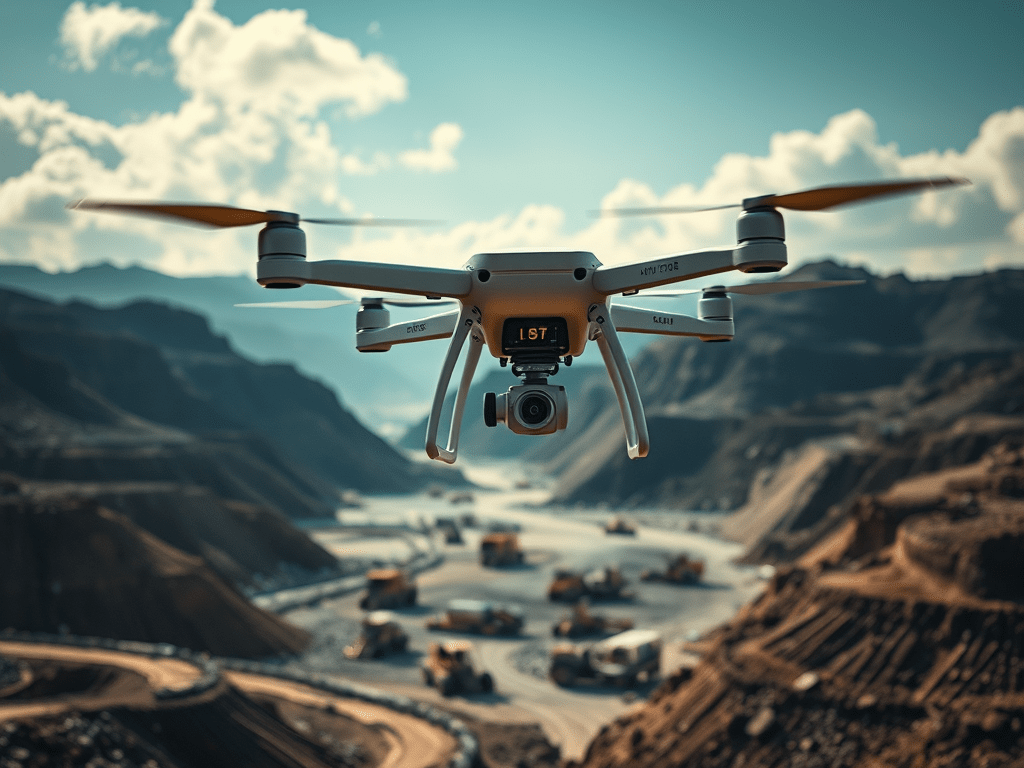
Innovation: From Fire to Flight in the World of Mining
© DenaliGuide | Mining & Money Reflections
When was the first true innovation in mining?
Was it the moment water trickled across rock, revealing shimmering traces of electrum (alloy of gold and silver)?
Or perhaps it was when a searing fire atop a mineral deposit created a gleaming puddle? It left behind crude dore — silver and gold fused in nature’s furnace.

Whatever it was, it surely lit a fire of wonder in the hearts of those first discoverers. From that spark, an unbroken chain of innovation stretches through history. Each generation builds better tools and chases the prize buried in the earth.
The Drive to Dig Deeper
(scroll down to see the video)
Early humans used their own muscle, then animals, and then fire to dig and melt metal from stone. With time came the blacksmiths, then the miners, each mastering tools of increasing power and precision.
War, as always, accelerated change. Mining took on new meaning. The growing need for energy, from wood to coal to oil, led to deeper and wider excavation. The ground beneath the water table, once unreachable, can be drained and explored. With explosives came even greater, displacing hand chisels and crude picks with blasts that tore open new opportunities.
Geology became its own science — no longer guesswork, but layers of earth analyzed for hints and signs. Strata, faults, and even plant life told stories. “Dig here,” they whispered.
Adventurers and Aerial Eyes
Mining has always attracted adventurers. It was inevitable that one day, one of them would spot something strange from the air. A glint, a fold in the land — something that didn’t belong. A new expedition was born: aerial prospecting.
At first it was simple. Some even staked mineral claims from airplanes — odd, but true. Then came the next wave: aerial surveys, magnetic anomaly detection, polarization mapping, and time domain electromagnetic studies. The skies became the prospector’s new frontier.
Aviation and geology fused into a new kind of industry — and it paid off. Huge discoveries, entire mining towns, and global booms were launched from the sky.
Robots and the Rise of the Drones
As the 20th century gave way to the 21st, brute strength came from fossil fuels and chemical refinement. Robots stepped into the most dangerous jobs, doing what human miners once risked their lives to achieve.
Now, in a new era of micro-detection, we can trace metal particles in water and soil at parts-per-billion. But it’s not just labs doing the work.
Enter: the drone.
Drone: The Innovation of Our Time
Drone warfare development is the product of military urgency. Still, its technological breakthroughs have reshaped civilian industries. Mining is no exception.
In terrain reshaped by centuries of construction, reforestation, and erosion, it’s almost impossible to spot ancient land-forms. Satellite imagery is too high. Conventional flights are expensive and limited.
Drones have changed the game.
Drones offer unmatched flexibility and repeat flight paths. They have a low operational cost. These capabilities allow drones to scan vast areas daily. They can also capture data at different angles and resolutions. They offer miners and geologists a view that is closer, clearer, and more consistent than ever before.
This is no small shift. This is, arguably, the most significant innovation since mechanized mining began. And its impact is just beginning to be felt.
What’s Next?
As groundbreaking as drone technology is, it’s not the end of the innovation story. In our next installment, we’ll dive into another revolution in the mining world — just as impactful, just as transformative.
You won’t want to miss it.
Until then — keep exploring.
© DenaliGuide
 Denaliguide Summit
Leave a comment